
Automatic pet feeder: how to choose by job and water access
Choose a feeder by the job it needs to do: release a meal at a set time or give one pet access to a filled bowl. For a fountain, check which parts hold the water and how you will clean the pump.
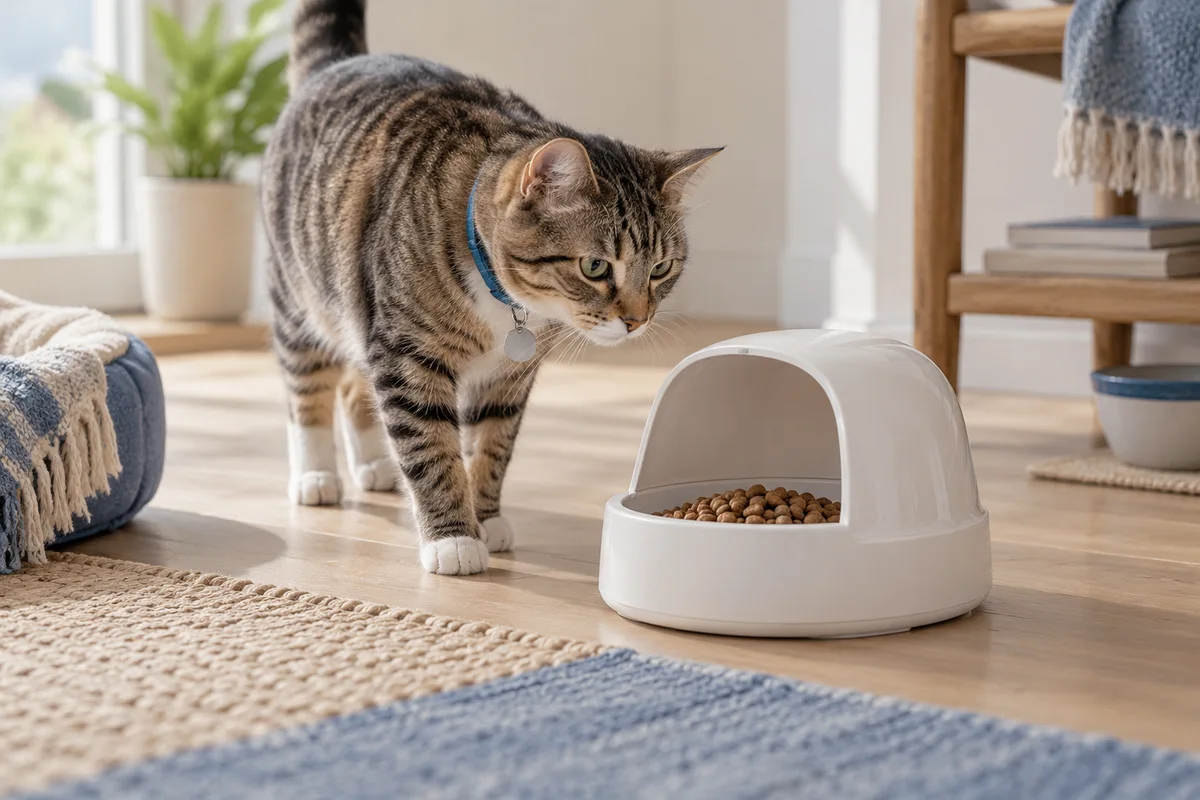
Leave room for a cat to approach a covered bowl and move away comfortably.
This guide uses published product information and the linked model reviews. PetReviewed has not tested these feeders or fountains; buyer reports describe individual experiences. How we research
In this guide
Two decisions come before any model
Start with the meal you need to manage. If food must arrive at a particular time, look for a feeder that specifies scheduled dispensing and the food it can release. If another pet keeps eating from the wrong bowl, check a feeder that controls access. An automatic pet feeder can perform either job, so read the controls before comparing capacity or price.
For drinking water, decide what you can take apart and wash. A fountain adds a pump and water passages to the bowl. Look at the refill opening, the parts that touch water and the route to the pump. Choose a setup you can maintain in the place where the cat will drink.
Feeders: timed portions or controlled access
An automatic pet feeder running on a schedule needs checks for meal settings and portion adjustment. Find out whether the schedule works without an app connection, what happens when power fails and which food sizes the dispenser supports. Treat an unanswered question as something to resolve with the exact model’s manual or seller.
The white HEAPETS RFID feeder uses a paired collar tag to open a bowl you fill yourself. Its captured listing specifies one paired tag per feeder and excludes implanted microchip recognition. It does not establish timed portion dispensing. This is an access choice for pets that share a feeding area.
Check whether the cat accepts a collar, whether its head fits the shield and how the other pets behave while the lid closes. The HEAPETS review records both useful access control and a buyer’s concern about stolen bites during the closing delay. Its corded power is documented; backup power and the lid’s position during an outage remain unconfirmed.
Write down who will fill the bowl or meal compartments and when the next refill can happen. Check the instructions against that routine before setting a schedule. For pets eating different foods, identify which bowl belongs to each pet and watch a shared meal. A timer setting alone does not tell you which cat reaches the food once it becomes available.
Water fountains: material, pump and noise
Read the material description for each part. A stainless steel drinking tray can sit above a plastic water reservoir. If you want steel throughout the water container, confirm the reservoir separately. For plastic or ceramic models, make the same check and read the washing instructions for each component.
Before choosing a fountain, locate the pump in the assembly instructions. Check how to remove it, which parts need a small brush and whether a replacement pump has a model or part number you can order. Find the filter size and replacement instructions too. A product title alone will not answer those questions.
A seller’s quietness claim and one buyer’s bedroom experience give you different kinds of information. Neither establishes what you will hear beside your own bed. Check the operating modes and water-level instructions, then use the stainless steel cat water fountain guide to compare the recorded models and their limits.
Picture the washing task at your sink. Check whether the reservoir fits, whether the cable or base stays separate and where you will put the detached pump and filter. Read any instructions for drying parts before reassembly. Decide how you will provide water while the fountain is being cleaned or charged. If lifting a filled tank is awkward, check the documented refill method before choosing its location.
What the published specs do not tell you
Capacity describes how much a container holds. On an automatic pet feeder, it does not show whether the dispenser releases the portion you intend, whether a second cat can reach a guarded bowl or how easily you can wash a pump housing. Check those tasks during setup while you can watch the pets use the equipment.
Keep seller claims separate from buyer reports. A review can describe a particular cat’s training or a problem with cleaning; it cannot tell you how often that result occurs across all households. Our model guides retain the report’s date and variant information where available. Missing details remain unresolved.
A listing and a manual answer different questions. The listing describes the selected variant and the parts included in its package. The manual should explain settings, cleaning steps and operating warnings. Check that it covers the same model and version before following it. If the two disagree about runtime, permitted food or a washable part, ask the manufacturer to resolve the conflict before relying on that feature. Keep the exact model and ASIN with your notes: a similar-looking variant can have a different power source or supply different parts in the box.
During the first few uses, keep notes on what you set and what you observe. For scheduled food, watch the opening or dispensing step and compare it with the intended meal. For guarded bowls, watch both the assigned pet and the others nearby. For a fountain, check the refill and pump-removal steps yourself. If a step behaves differently from the instructions, record the setting and ask the maker about that specific behavior.
Before keeping the equipment, look up the consumables and parts you will need to order again. Record the exact filter, pump, bowl or collar-tag reference and confirm compatibility with your version. Check delivery availability and replacement instructions. An unidentified spare part leaves an ownership question open even when the initial package includes everything needed for setup.
Category guides
- Compare stainless steel cat water fountains: check the drinking surface, reservoir, pump access and the evidence for each model.
- Choose a wet food automatic cat feeder: separate meal scheduling from bowl access, then check cooling, cleaning and power recovery.
- Read the HEAPETS RFID cat feeder review: check collar access, shield clearance, cleaning and the unanswered power questions for white Feeder WH, ASIN B0H8C97MM8.
Use the category guide to narrow the task, then open the model’s current listing and instructions before ordering. Match the ASIN and variant, including the parts supplied in the selected package.
Common questions
Does an automatic pet feeder dispense food on a schedule?
Check the exact model. Some products use automatic opening to control bowl access. The HEAPETS RFID model covered here opens a manually filled bowl; its listing does not establish a meal schedule or timed portions.
Can the HEAPETS feeder recognize an implanted microchip?
The captured white Feeder WH listing explicitly excludes implanted microchip recognition. It specifies one paired RFID collar tag per feeder. Confirm replacement-tag availability before relying on that arrangement.
Does a stainless steel tray mean the whole fountain is steel?
Confirm the reservoir and other parts that touch water separately. Use the listing’s material descriptions and assembly pictures to identify the container beneath the drinking tray.
What should I check before putting a fountain near a bedroom?
Read how its operating modes work, how much water the pump requires and how to access it for cleaning. Look for buyer reports that identify the same model and describe where it was used. We have not measured fountain noise.
What happens if the power goes out?
Ask about the exact device’s behavior. For a feeder, check access to food and whether settings survive the outage. For a fountain, check whether water remains accessible with the pump stopped. The HEAPETS listing leaves backup power and lid position without power unconfirmed.
Sources and further reading
Product details can change; check the current listing and manual for your exact model.